PRODUCT CATEGORIZATION

At Northern Base AI Labs, we provide advanced product categorization services to help e-commerce platforms, retailers, and businesses organize their products efficiently. Our services use AI and machine learning to classify products accurately, assign categories, and enhance search, recommendation, and inventory management systems.
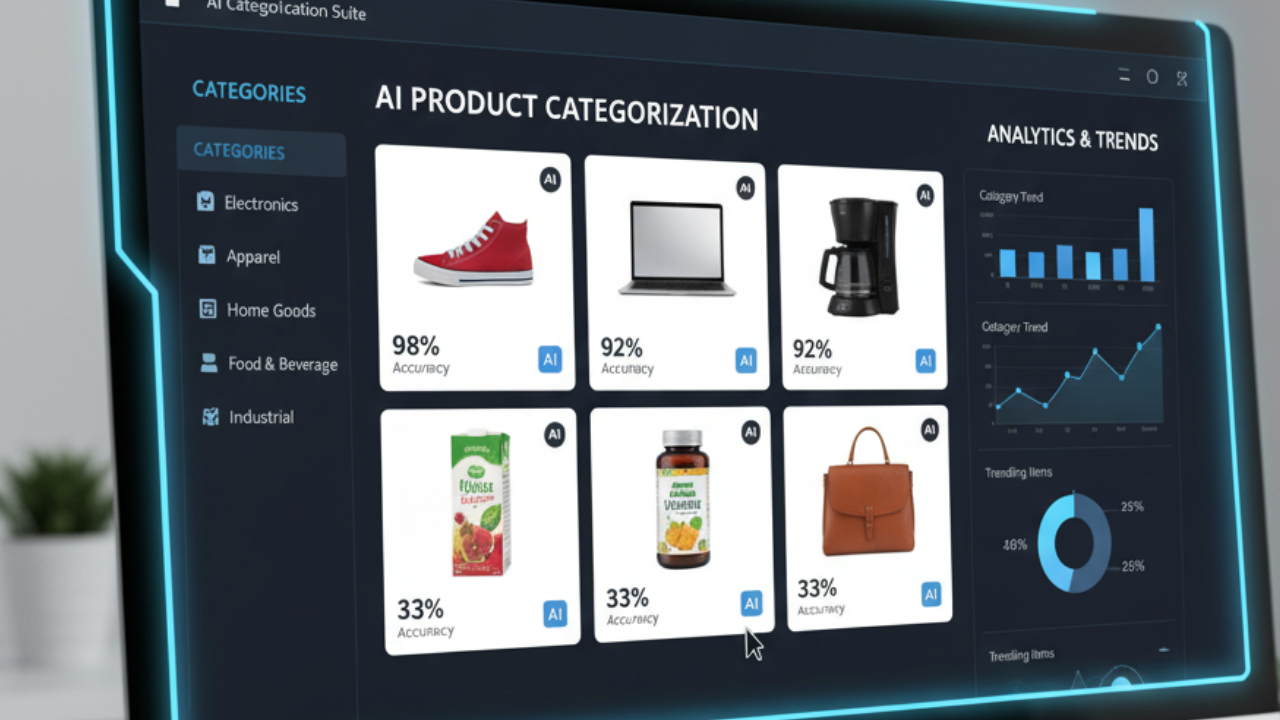
Product Categorization

Major Types of Product Categorization Labeling / Annotation

Product Category Tagging

Assigning products into specific categories such as electronics, apparel, or home decor for better organization and searchability.
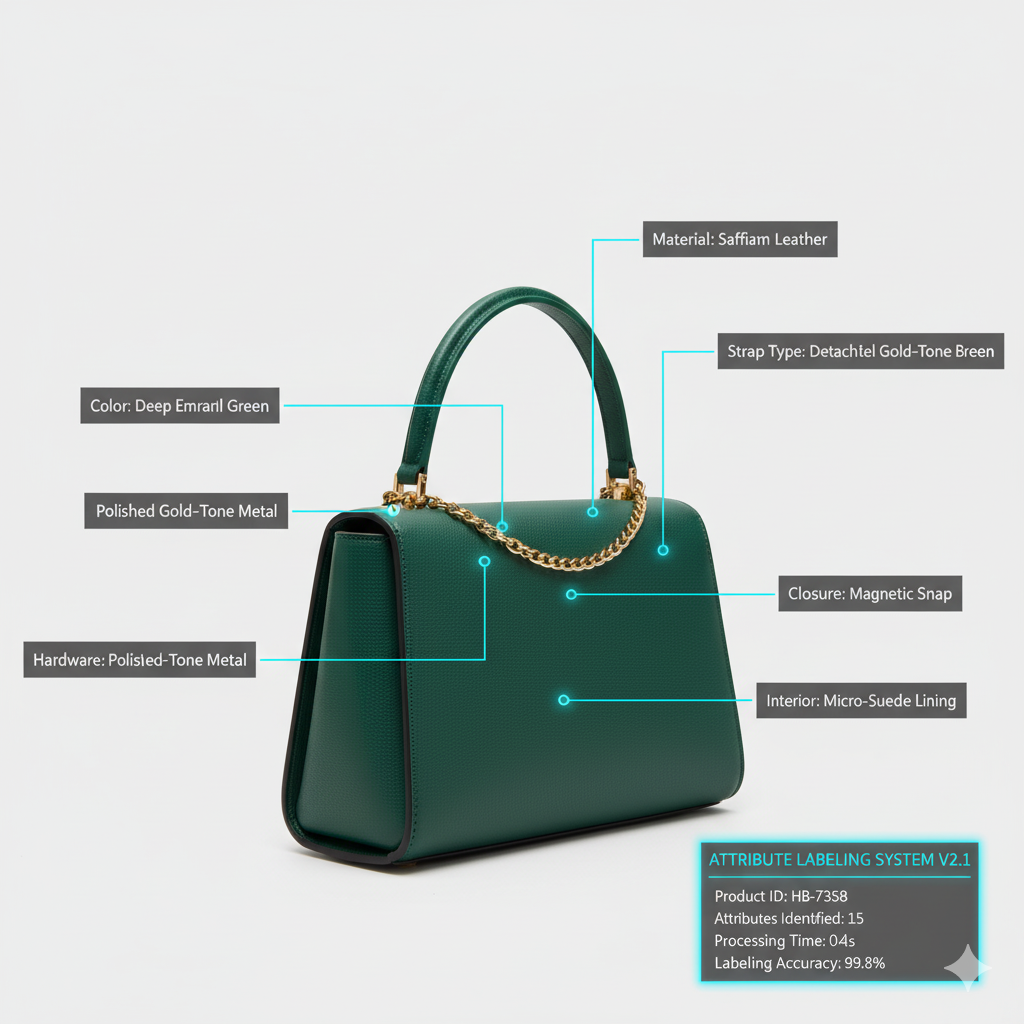
Attribute Labeling

Annotating specific product attributes like color, size, material, or pattern to enhance filtering and recommendation systems.

Brand Tagging

Identifying and labeling brand names or logos in product images for brand recognition and catalog consistency.
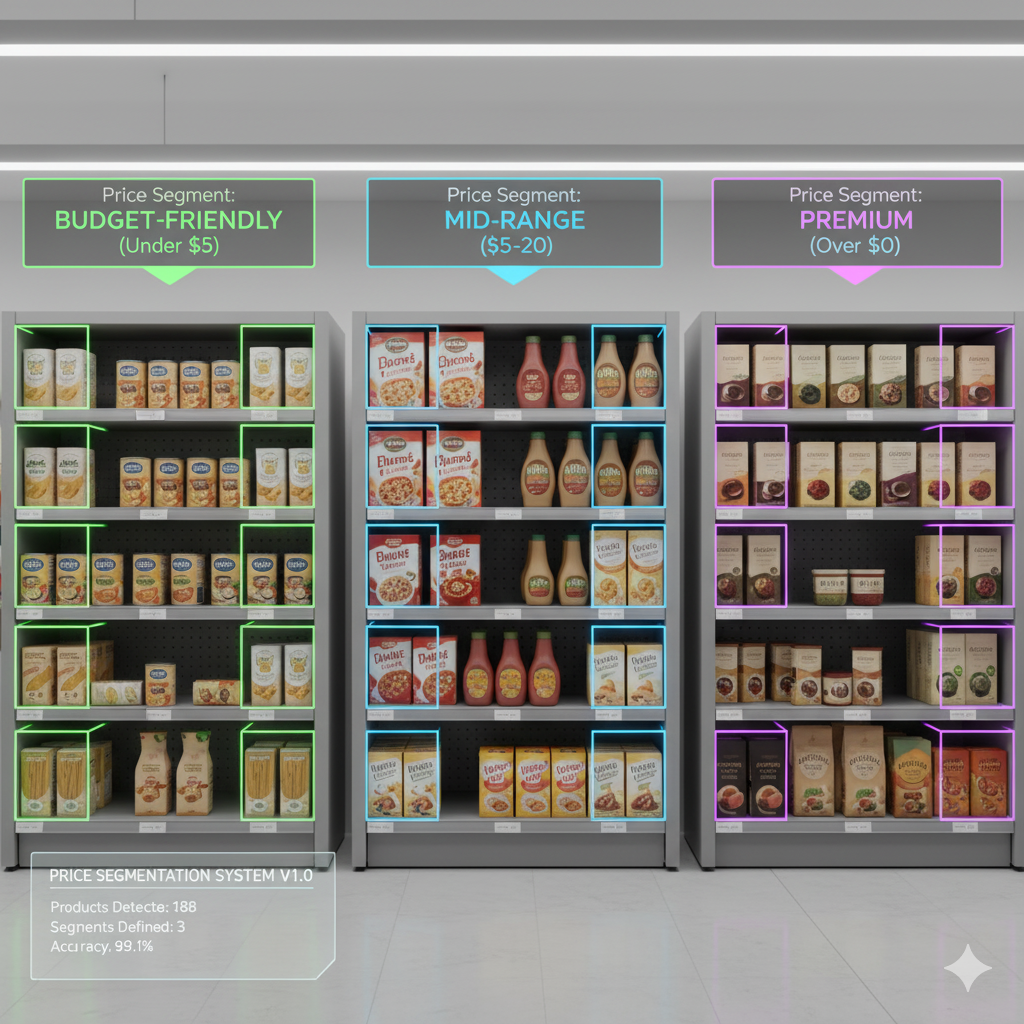
Price Segmentation Labeling

Categorizing products based on price range (budget, mid-range, premium) for better market analysis and AI training.
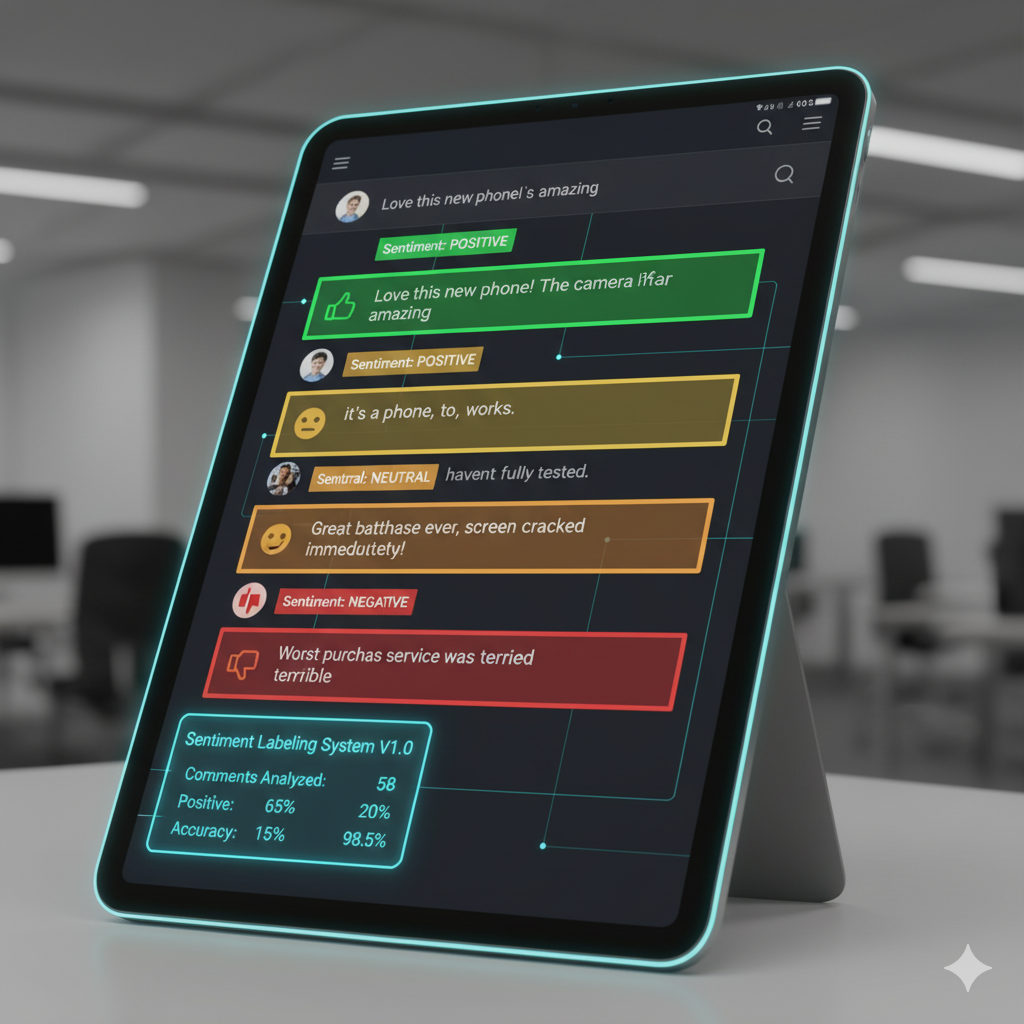
Sentiment Labeling

Annotating product reviews and feedback as positive, neutral, or negative for sentiment analysis and quality control.

Text Annotation

Identifying and labeling textual elements like labels, barcodes, and packaging text to enhance OCR and catalog data accuracy.

Aesthetic Quality Labeling

Classifying product visuals based on image quality, composition, or appeal to improve AI-driven visual recommendations.

Industry-specific Product Categorization Services

E-commerce

Categorizing products accurately for online stores to improve catalog management, search, recommendation systems, and personalized shopping experiences.

Retail

Organizing store inventory and product categories for better stock management, shelf analytics, and customer behavior analysis.

Manufacturing

Categorizing products, parts, and components for better inventory management, quality control, and supply chain optimization.

Healthcare & Pharmaceuticals

Categorizing medical products, medications, and equipment to ensure accurate cataloging, inventory, and AI-based decision support systems.

Agriculture

Categorizing seeds, crops, fertilizers, and agricultural tools to streamline inventory, supply chain, and farm-to-market operations.

Logistics & Supply Chain

Categorizing packages, shipments, and products to optimize warehouse management, delivery tracking, and AI-powered routing systems.

Retail Catalog Delivery

Why Ecommerce Teams Choose Us

Catalog Pilot Review

Start with a focused SKU sample to validate category rules, attribute mapping and marketplace taxonomy decisions before scaling the catalog.

01

SKU-Based Scaling

Plan categorization work around SKU count, attribute complexity, taxonomy depth and review requirements for Amazon, Walmart, Shopify or custom catalogs.

02

Marketplace Workflow Ready

Product labels can be prepared for marketplace uploads, PIM systems, ecommerce search, recommendation models and retail AI classification workflows.

03

Retail Data Governance

Catalog files, seller data, pricing attributes and product metadata can be handled with controlled access and clear review boundaries.

04

Seasonal Catalog Capacity

Capacity can expand for new product launches, seasonal catalog refreshes, marketplace cleanup projects and high-volume taxonomy corrections.

05

Start Your Project

Product Categorization for Ecommerce and Retail AI

Accurate product categorization helps marketplaces, retailers and ecommerce teams organize catalogs, improve discovery and prepare product data for AI workflows.

Ecommerce Product Categorization Use Cases

Product categorization supports Amazon sellers, Walmart Marketplace teams, Shopify stores, retail catalog managers and product discovery systems. A seller may need thousands of SKUs mapped into marketplace categories. A retail team may need product titles, descriptions and images reviewed so every item appears in the right department, subcategory and attribute group.

For AI teams, categorization data can also support product recommendation models, search relevance, catalog enrichment, duplicate detection and automated product tagging. When product images need additional review, teams can combine categorization with image annotation services to improve visual search and product understanding.

Benefits of Accurate Product Categorization

Accurate product categories improve search results, product discovery, recommendations and conversion rates. Customers find products faster when the catalog structure matches how they shop. Merchandising teams can analyze performance more accurately when SKUs are grouped consistently. AI teams can train models on cleaner labels when product categories are not mixed, duplicated or overly broad.

Better categorization also reduces operational friction. Fewer products are hidden in the wrong category, fewer filters return irrelevant results and fewer teams need to manually correct catalog errors after products are already live.

Product Taxonomy Management

Taxonomy management includes category structures, hierarchies, attribute mapping and catalog consistency. A strong taxonomy defines how broad departments break into subcategories, which attributes matter for each product type and how edge cases should be handled when a product could fit multiple categories.

For enterprise catalogs, consistency matters as much as coverage. If similar products are placed in different branches of the taxonomy, search and recommendation systems become less reliable. Northern Base AI Labs can help teams review category decisions, normalize attributes and prepare catalog data for quality checks or data audit services.

AI Product Categorization Workflows

AI product categorization workflows usually start with dataset preparation. Product titles, descriptions, images, attributes and existing categories are reviewed so the team can identify missing fields, noisy labels and taxonomy gaps. Human labeling then maps products to approved categories and attributes. Validation checks confirm whether labels are consistent enough for search, analytics or model training.

Once the dataset is validated, it can support model training, automated tagging, catalog enrichment and human-in-the-loop review. US ecommerce teams can contact our team to scope a pilot batch before scaling categorization across a larger catalog.

Retail Industry Examples

A home goods retailer may need products grouped by room, material, style and use case so customers can filter accurately. A fashion marketplace may need apparel categorized by garment type, gender, size, color and season. A grocery catalog may require consistent mapping across brand, dietary attributes, package size and shelf category. In each case, product categorization improves both customer experience and downstream AI performance.

Product Categorization FAQ

What is product categorization?

Product categorization is the process of assigning products to the correct taxonomy categories, subcategories and attributes so catalogs are easier to search, analyze and manage.

Why does categorization matter for ecommerce?

Accurate categories improve product discovery, search filters, recommendations, merchandising reports and conversion paths because customers see more relevant products.

Can categorization support AI model training?

Yes. Clean product categories and attributes can become training labels for automated tagging, recommendation models, catalog enrichment and product understanding systems.

How do you manage complex product taxonomies?

Complex taxonomies are managed with clear category rules, hierarchy definitions, attribute requirements and reviewer guidance for edge cases or products that could fit multiple categories.

What types of product data can be reviewed?

Teams can review product titles, descriptions, images, attributes, marketplace categories, existing labels and catalog metadata depending on the project scope.

Can you help clean existing catalog errors?

Yes. Existing catalogs can be audited for incorrect categories, missing attributes, duplicate labels and inconsistent taxonomy decisions before correction or model training.

Catalog Quality Support for Retail AI Teams

01

Marketplace Taxonomy Mapping

Product records can be mapped to Amazon, Walmart, Shopify or custom retail taxonomies so listings align with each channel's category rules.

02

Search Relevance Review

Category and attribute labels are reviewed against how shoppers search, filter and compare products across ecommerce catalogs.

03

Recommendation Data Cleanup

Cleaner category, brand, size, style and compatibility attributes help recommendation systems group similar products with fewer noisy signals.

04

Catalog Consistency Checks

Human review can flag duplicate category decisions, missing attributes, over-broad labels and inconsistent treatment of similar SKUs.

05

Retail AI Training Labels

Validated product classes and attributes can support ecommerce classification models, automated tagging and product discovery workflows.

06

Commercial QA Feedback

Review notes can identify taxonomy gaps, seller listing problems and catalog rules that need refinement before large-scale rollout.